Modern transportation no longer depends only on vehicles, roads, and traffic signals.
It depends on how well those elements share information. V2X communication, short
for vehicle to everything communication, creates that link. It allows vehicles to
exchange real time traffic information with other vehicles, roadside infrastructure,
pedestrians, and network services. In practical terms, V2X enables vehicles, signals,
and roadside systems to act on shared data rather than operate in isolation. That
shift matters because safer, faster, and more adaptive mobility starts with better
communication across the whole road environment.
Modern transportation needs V2X
The scale of the problem reinforces the urgency. According to WHO statistics,
approximately 1.19 million people die on the world's roads each year, and road
crashes cost most countries up to 3% of their GDP. Most of these losses trace back
to the same root cause: vehicles operating in isolation, blind to hazards beyond line
of sight and disconnected from the systems around them.
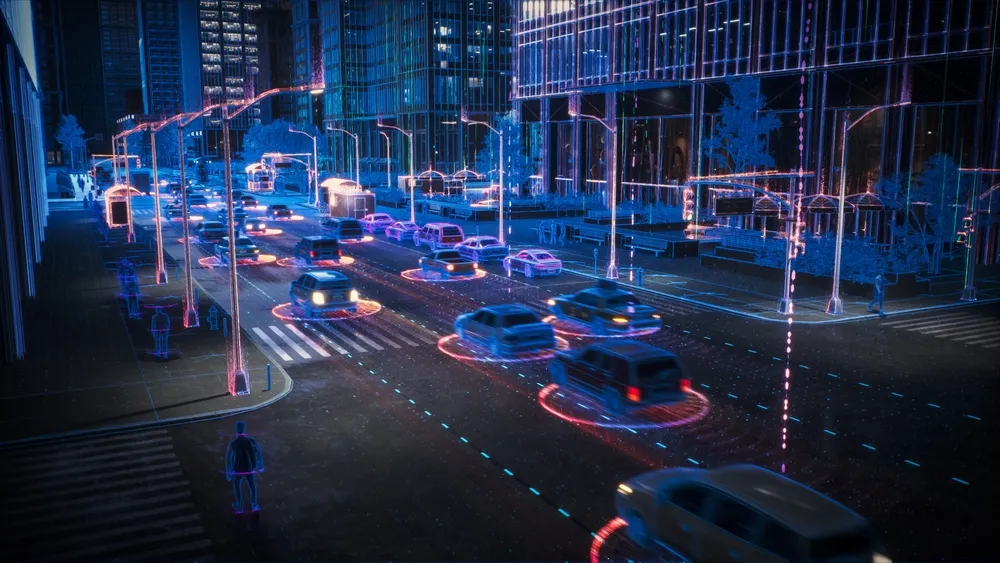
At the centre of V2X lies a simple idea: a vehicle should not rely solely on onboard
sensors or the driver's line of sight; it should also receive warnings, status updates,
and traffic data from the wider environment. V2X creates a connected ecosystem that
links vehicles, infrastructure, pedestrians, and networks through wireless
communications and edge computing. That ecosystem directly targets the problems
traditional systems leave unsolved: hidden hazards, disconnected infrastructure,
inefficient traffic signals, delayed emergency response, and the lack of a solid
foundation for autonomous mobility.
The four communication paths
The V2X ecosystem includes four core communication paths. The most commonly
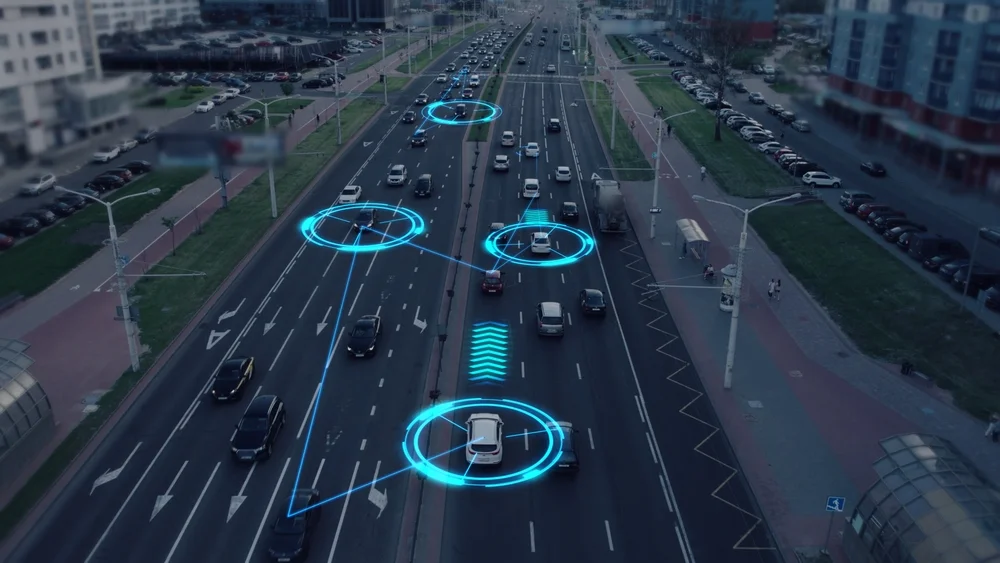
known is V2V, or vehicle to vehicle communication. It enables cars to exchange
safety messages directly, supporting features such as collision warnings, emergency
brake alerts, and cooperative driving. V2V collision warning systems can detect
threats up to 300 meters away, roughly ten times the effective range of conventional
onboard sensors. While it is mostly known for safety applications, there are additional
benefits, such as cooperative adaptive cruise control, which could even be used to
create vehicle platoons, reducing fuel consumption by approximately 15%.
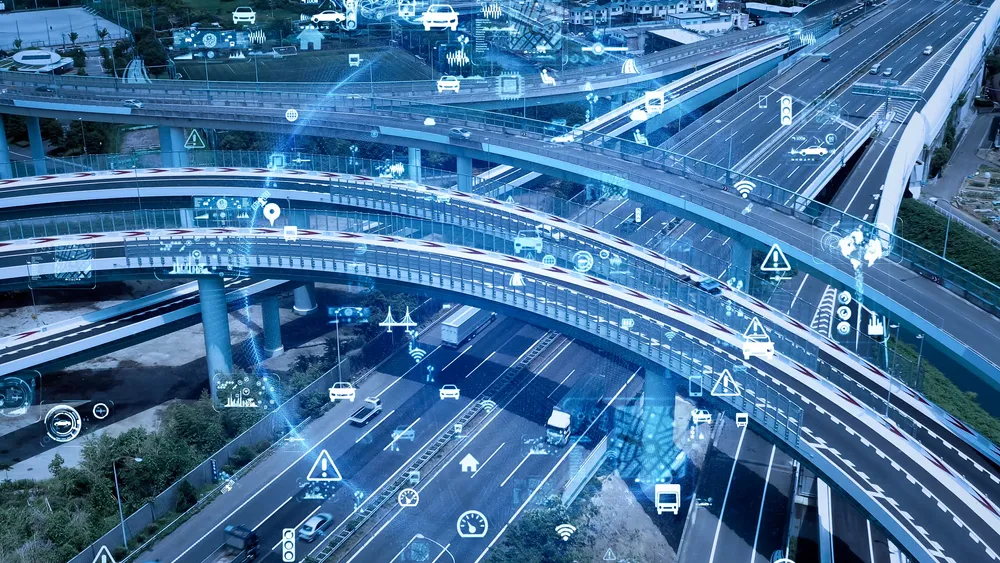
V2I, or vehicle to infrastructure communication, connects vehicles with roadside
units, intersections, and traffic control systems. This part of the ecosystem supports
signal priority, speed guidance, and traffic flow optimisation. Field deployments show
that dynamic signal phase timing through V2I can reduce intersection wait times by
up to 40%.
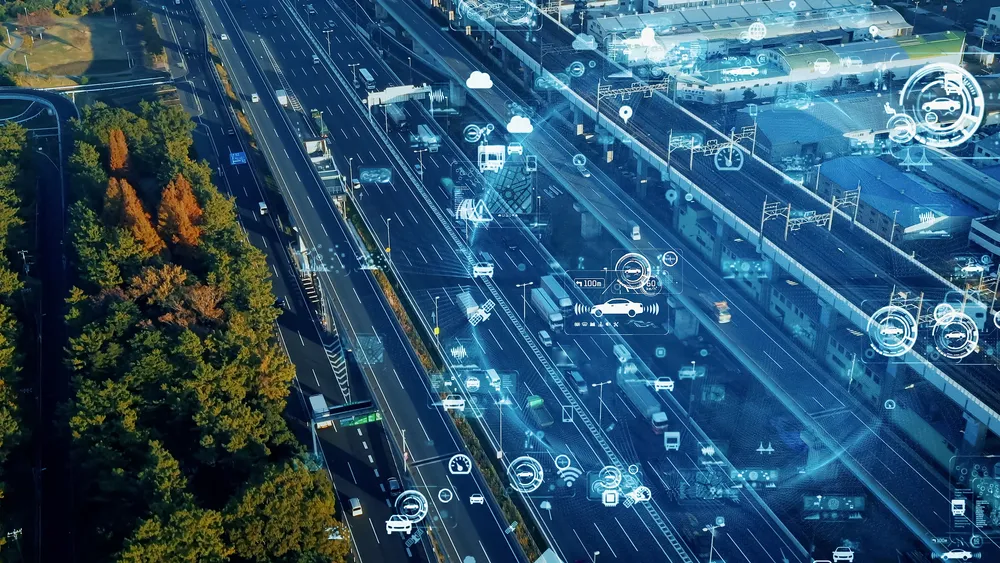
V2N – vehicle to network communication – connects vehicles to cloud services and
centralised traffic management platforms. This layer aggregates data from thousands
of vehicles to support dynamic routing, predictive maintenance alerts, and multimodal
journey planning. V2N turns individual vehicle data into system-wide intelligence that
traffic operators can act on in real time.
One of the most exciting new fields is V2P technology. It connects vehicles with
pedestrians and cyclists, often using mobile devices or roadside systems, allowing
drivers to gain earlier awareness of vulnerable road users. V2P is especially
important for use cases such as school zone safety systems and accessible crossing
assistance.
Together, these four layers form the operational backbone of a connected vehicle
platform.
Why connectivity changes the equation
This matters because modern roads are becoming increasingly complex. Intelligent
transportation systems need continuous data exchange to improve safety and
efficiency simultaneously. When a vehicle can receive real-time road hazard
warnings, signal phase updates, or emergency vehicle requests, traffic management
becomes more proactive. When infrastructure can receive live vehicle data, operators
can improve congestion management, route guidance, and incident response. That is
why V2X now sits close to the centre of cooperative intelligent transport systems and
connected infrastructure strategies.
While the safety case alone makes a strong argument, there are serious
environmental factors to consider. With the help of V2X technology, transportation
can be safer and more efficient. A good example is that international V2X
deployments are already showing significant reductions in pedestrian accidents
through V2P alerts and major improvements in emergency response times through
priority routing.
The technology behind V2X
Technology also explains why V2X has gained momentum. Current deployments may
use DSRC and IEEE 802.11p, while newer architectures increasingly incorporate C-
V2X technology, 5G connectivity, and MEC (multi-access edge computing). That mix
gives transport operators greater flexibility when designing smart road technology for
urban corridors, highways, or mixed-traffic environments. It also strengthens the role
of edge computing infrastructure, because many safety-related decisions demand
very low latency and local processing.
V2X as a strategic enabler
V2X also plays a strategic role in the future of mobility. As cities invest in smart
mobility solutions and autonomous vehicle infrastructure, they need roads and
intersections that can communicate clearly with vehicles from different
manufacturers. Autonomous and connected vehicles need precise environmental
data, standardised interfaces, and reliable vehicle to infrastructure communication if
they are to operate safely at scale. In that sense, V2X is not just another transport
feature. It is a core enabler of connected car solutions and next-generation intelligent
transportation systems architecture. Without V2X communication, transportation
systems remain reactive, inefficient, and unnecessarily dangerous and incompatible
with smart city ambitions and sustainability goals.
For cities, highway operators, and transport authorities, the real value of V2X lies in
turning passive infrastructure into connected infrastructure. Roads stop acting like
static assets and start acting like responsive systems. Signals can adapt. Vehicles
can warn each other. Pedestrians can become more visible. Traffic centres can make
faster decisions with better data. That is why V2X matters for modern transportation.
It improves traffic safety technology today while creating a practical path toward
smarter, cleaner, and more connected mobility tomorrow.
Pioneering connected mobility with Lillyneir
Lillyneir has extensive experience in deploying V2X systems across highway
networks. We deliver solutions that protect road users today while preparing
infrastructure for the future integration of autonomous vehicles. From protocol design
and roadside unit optimisation to city-wide rollout strategies, we help transportation
authorities turn V2X from concept into operational reality.